
The language field guide / 09
Circle Back Meaning: Work Examples and Follow-Ups
Return to the topic with a reason—and a clear next step.
Editorial guide ·
Go to worked examples ↓
Circle back meaning in a work conversation
The usual circle back meaning is to return to a topic, question or conversation that came up earlier. In a workplace message, it often signals that somebody wants to revisit an unfinished discussion. The phrase alone does not say when that will happen, who will initiate it or whether the issue will be resolved.
“Let's circle back after the review” connects the return to an event. “I'll circle back on Friday with the revised options” adds an owner, a time and a deliverable. “We should circle back sometime” leaves those details open. Read the whole sentence before treating any of these as the same commitment.
This guide explains circle back meaning through complete professional exchanges. It focuses on returning with useful information, postponing honestly and asking about a missing update. It cannot tell you whether a particular colleague is avoiding a subject: that requires more context than a familiar phrase.
Circle back meaning versus checking in or closing
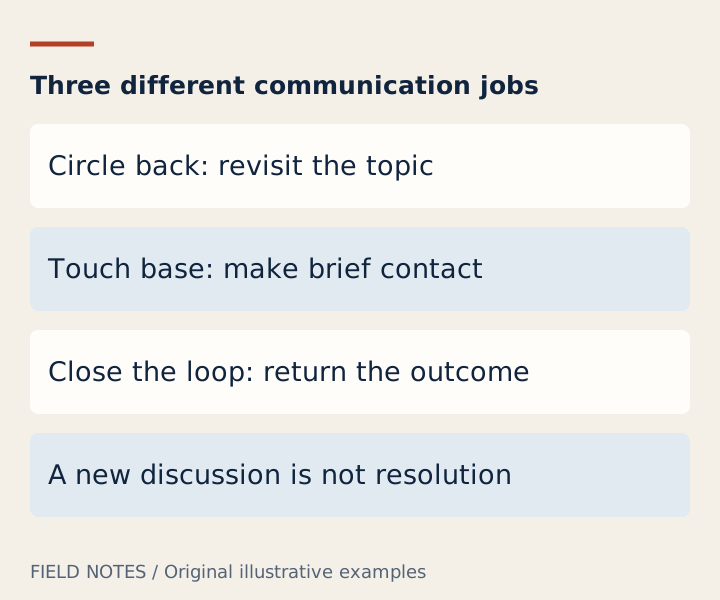
Circle back meaning emphasizes a return to something already raised. A touch base message emphasizes brief contact and may introduce a new topic. Following up can include requesting a promised response or continuing after an event. These expressions overlap, but the most useful wording names the actual purpose.
Returning is also different from closing the loop. You can revisit a problem and discover that it remains unresolved. Closing the communication loop usually requires returning the result or a clear status to the relevant person. Do not label a renewed discussion as completion simply because everybody has spoken again.
For circle back meaning in email, ask what changed since the earlier exchange. Perhaps new feedback arrived, a dependency cleared or a decision date is approaching. Put that reason near the start of your message. Without it, the recipient may have to reconstruct why the topic is appearing again.
Sometimes nothing has changed, but an agreed checkpoint has arrived. A truthful status update is still appropriate. Say what remains pending and what happens next. Do not manufacture progress to justify contacting someone, and do not silently replace a promised update with indefinite waiting.
Circle back meaning in three complete exchanges
These fictional examples show a sender's message, a possible reply and the information each exchange establishes. Use only deadlines and prior agreements that are true in your situation. The names and work details are illustrative, not customer results.
Return with information that was missing
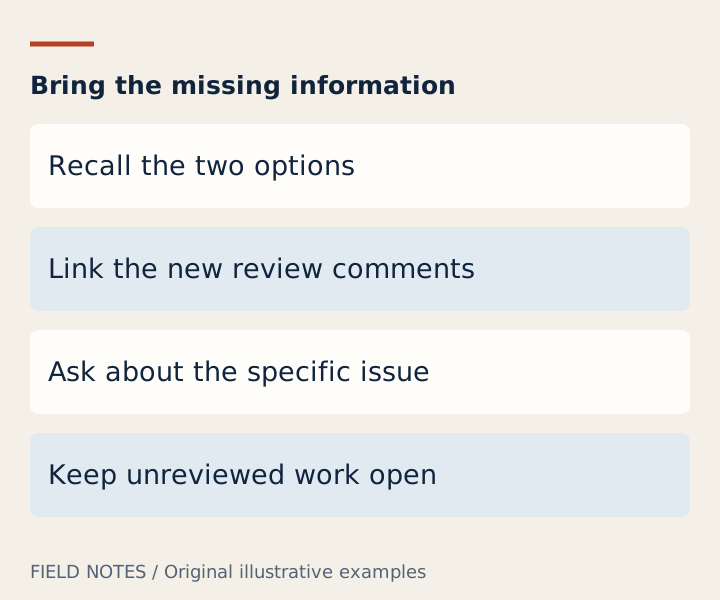
Message: “Circling back on the two onboarding options we discussed. The reviewer has now commented on both drafts. Option B needs a clearer opening example; I have linked those comments below. Could you review that issue before we choose a direction?”
Reply: “Yes. I can review the opening example tomorrow. I have not compared the implementation effort yet, so that part of the decision will still be open.”
The sender identifies the earlier topic and the new information. The request is specific enough to answer without replaying the entire discussion. The reply accepts one action while preserving a limit: reviewing language is not the same as estimating implementation effort or approving the option.
This circle back meaning works because the return advances the conversation. If the comments are already in a shared document, link the relevant section rather than pasting a long history. Make the new question visible so that the recipient understands what you need now.
Postpone without implying the issue disappeared
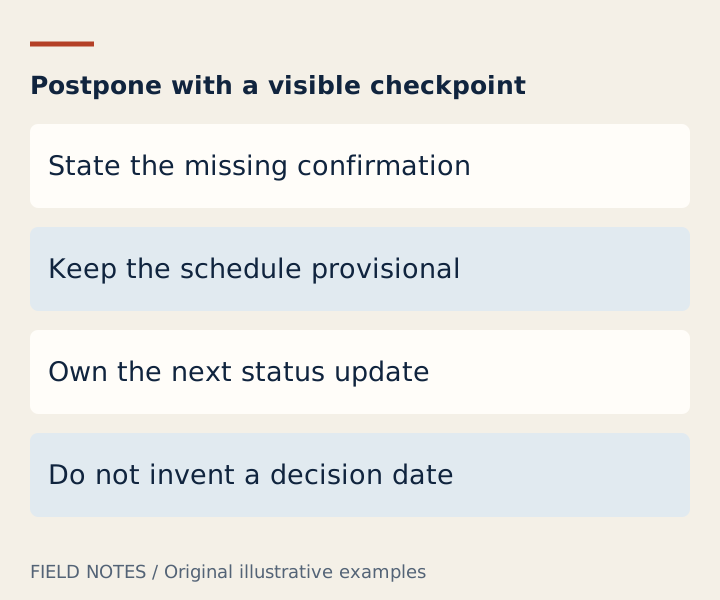
Message: “We cannot choose the final schedule until the reviewer confirms availability. Could we circle back after that confirmation? I will check for an update on Thursday and message you even if the answer is still pending.”
Reply: “That works. Please include whether we need to move the handoff date. I will keep the current date provisional until we have confirmation.”
Here the dependency is explicit. The sender proposes a return condition and commits to a separate checkpoint. The recipient confirms how the uncertainty affects their own work. Neither person describes the provisional schedule as final or assumes the reviewer has agreed to something.
Applying circle back meaning this way keeps postponement accountable. A trigger such as “after confirmation” can otherwise become an indefinite wait. If you cannot promise a checkpoint, state that honestly and agree who will monitor the dependency instead of adding a date merely to sound organized.
Ask about a return that has not happened
Message: “You mentioned circling back after Tuesday's review. Is there an update on the draft decision? If the review is still pending, please let me know the next checkpoint so I can plan the handoff.”
Reply: “The review happened, but the decision is still open. We need one clarification from the editor. I will send the current comments today and confirm the next decision date when it is agreed.”
The question references an actual prior statement within the example and asks for useful status. It does not accuse the recipient of forgetting. The reply distinguishes a completed meeting from an unfinished decision, offers available information and avoids inventing a date that nobody has confirmed.
Circle back meaning does not guarantee a successful outcome at the next contact. The useful result may be identifying what is missing. If your own deadline is affected, explain that dependency directly rather than escalating the tone because the phrase sounds repetitive.
Use circle back meaning with an actionable next step
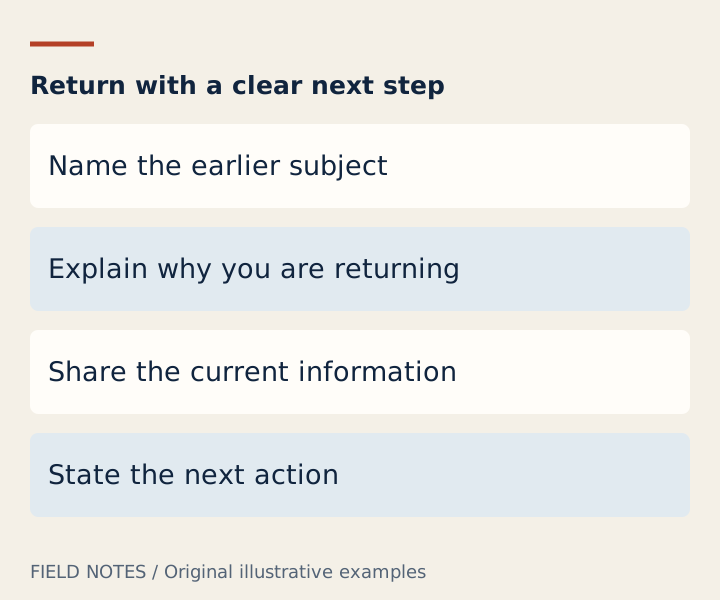
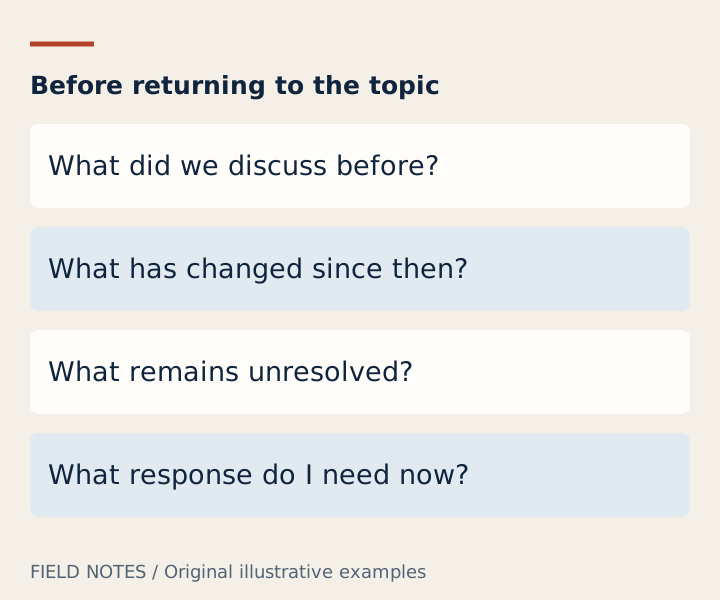
A good return message includes the earlier subject, the reason for returning, the current status and the requested action. Include a time only when it is known or clearly proposed. If you are simply providing information, say that no reply is needed rather than creating an accidental task.
For circle back meaning in your own writing, replace vague timing with a real checkpoint when possible. “I'll revisit this after the review and send the comments” is clearer than “I'll get back to this.” If the review date is uncertain, preserve that uncertainty rather than turning an estimate into a promise.
Choose a circle back synonym that fits the action: “revisit the question,” “return to the discussion” or “send a follow-up” may work. “Resolve” is not automatically equivalent. If someone only says the subject is on their radar, ask about the next action before assuming a return has been scheduled.
Questions about circle back meaning
Is circle back meaning always about work?
No. People can return to a subject in many settings. This guide focuses on professional messages, where unclear ownership or timing can affect other people's plans.
Is the expression rude or passive-aggressive?
Not inherently. Tone depends on the surrounding message, relationship and history. Ask about missing facts rather than inferring an intention from the expression alone.
What does “circle back with you” mean?
It usually means contact you again about the subject. Look for the promised information or timing in the rest of the sentence. If those details matter and are absent, ask for them.
How can I avoid an endless discussion?
Define the question that needs an answer, the missing information and who will return with it. For related expressions, use the LinkedIn Speak dictionary. A different phrase will not fix an undefined decision by itself.
Sources and scope
Definitions are grounded in the sources below. Dialogues and illustrations are original teaching examples, not quotations, customer results or claims about anyone’s intentions. This independent guide does not represent LinkedIn.