
The language field guide / 05
On My Radar Meaning: Work Examples and Replies
Noticed is not scheduled. Ask for the detail you need.
Editorial guide ·
Go to worked examples ↓
On my radar meaning at work
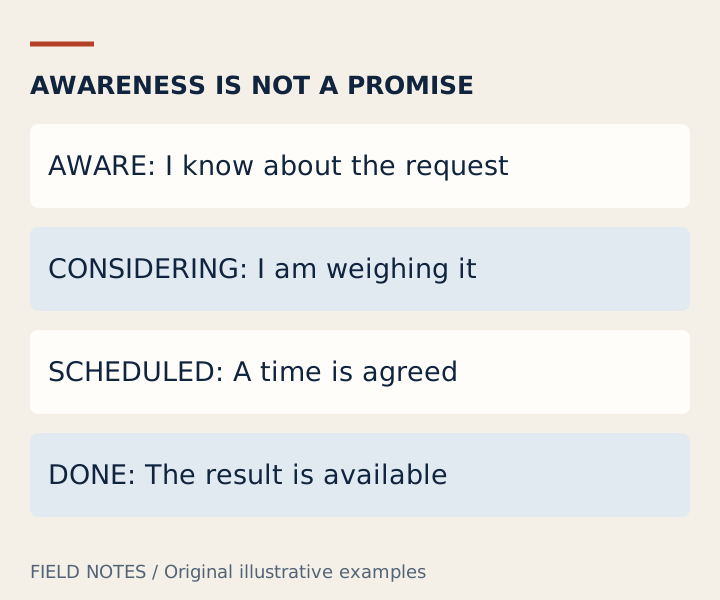
The usual on my radar meaning is “I am aware of it” or “I am considering it.” In a work message, the speaker may be acknowledging a request, an opportunity or an emerging problem. The phrase does not automatically mean the work is scheduled, approved or already happening. Look for a separate statement about the next action and timing.
If a colleague says, “The document update is on my radar,” you know the subject has their attention. You do not yet know whether they will revise it today, ask somebody else to review it or simply consider it at the next planning meeting. Those are different commitments and should not be supplied by an interpretation.
Understanding on my radar meaning helps you choose a useful reply. If awareness is all you needed, a brief acknowledgment may be enough. If your own work depends on the update, ask for a decision or timeframe directly. You can clarify the plan without accusing the person of ignoring you.
Read the whole sentence, not only the metaphor
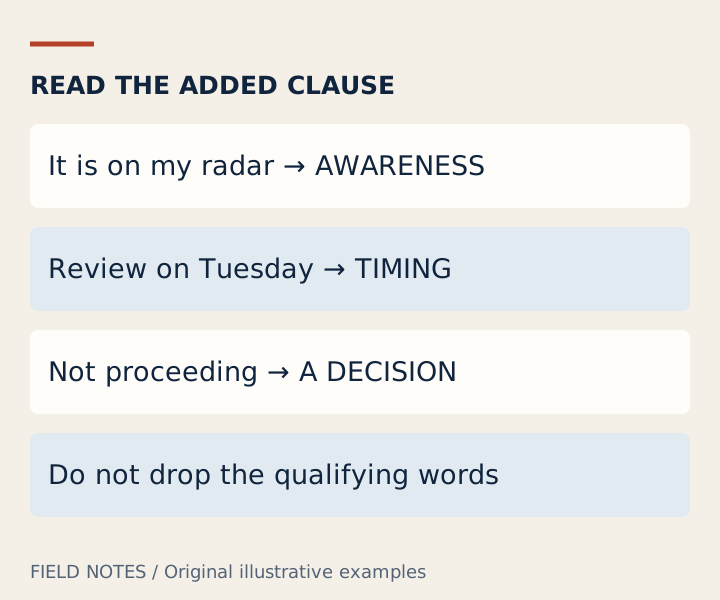
Context changes what the statement establishes. “It's on my radar” is an acknowledgment. “It's on my radar, and I will review it on Tuesday” adds an action and time. “It was on my radar, but we are not proceeding” communicates a decision not to continue. Preserve the additional clause when summarizing the message.
For on my radar meaning in a project conversation, identify the subject first. Is the person aware of the entire project, one request or a particular risk? Acknowledging a risk does not necessarily mean accepting responsibility for it. If ownership is important, ask who is tracking the issue rather than assuming the recipient has volunteered.
Also separate priority from awareness. A person can know about several requests while having capacity for only one. “Thanks for keeping it on your radar; where does it sit relative to this week's review?” asks about a real scheduling question. It is more useful than arguing over whether the phrase sounds enthusiastic enough.
The on my radar meaning does not establish a hidden motive. Familiar workplace language can be sincere and still imprecise. If the missing detail affects a deadline, make that consequence visible. If there is no time-sensitive need, avoid turning an ordinary acknowledgment into a demand for an immediate commitment.
Three replies for three different needs
The fictional exchanges below apply on my radar meaning to awareness, a dependency and an existing promise. They are patterns for your own facts, not evidence about a real colleague or customer.
You only needed to flag something
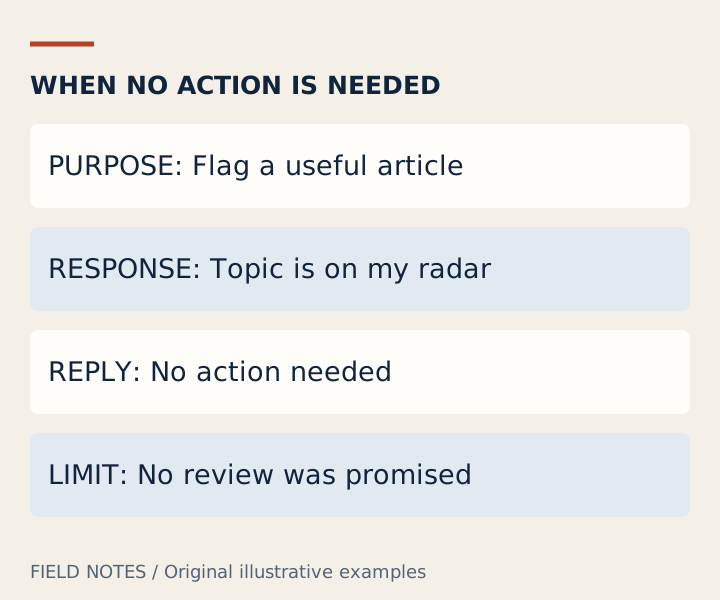
Message: “Thanks for sending the article. That topic is on my radar.”
Reply: “Glad it is useful. No action needed from you—I sent it because it relates to the research discussion. I'll share anything else directly relevant when I find it.”
This reply matches an information-sharing task. It does not create a new meeting, request a review or interpret the acknowledgment as a promise to read the article immediately. Both people can leave the exchange with the same understanding: the topic has been noticed.
An accurate reading of on my radar meaning can reduce unnecessary follow-up. If you did not request an action, do not later treat the acknowledgment as acceptance of one. Introduce a new request explicitly if your needs change.
Your work depends on their review
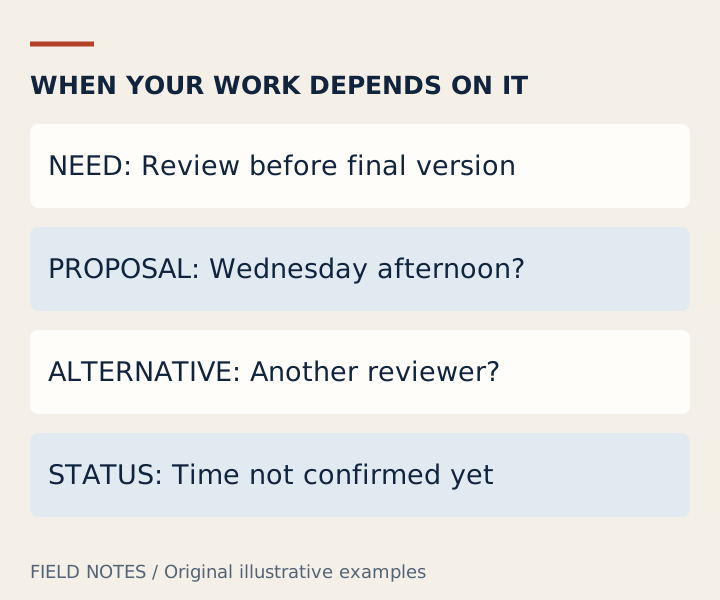
Message: “The draft review is on my radar.”
Reply: “Thank you. I need the review before I can send the final version on Thursday. Would Wednesday afternoon work, or should we agree on another reviewer? I have not treated that time as confirmed yet.”
The reply explains the dependency, proposes a time and offers a realistic alternative. It avoids presenting an invented deadline as something the colleague already accepted. If the answer is no, you can adjust the plan instead of waiting under a false assumption.
Here on my radar meaning answers the awareness question but not the scheduling question. Make the latter explicit. If the deadline is flexible, say so. If it is fixed for a real reason, state that reason without exaggerating the consequence to pressure the person.
There was already an agreed date
Message: “Yes, it is still on my radar.”
Reply: “Thanks. We previously agreed on Tuesday for the comments. Is that still workable? If something has changed, please let me know the revised timing so I can update the handoff.”
This reply uses the existing agreement rather than inventing one. The phrase alone does not cancel the date, but it also does not provide a fresh progress report. A direct check lets the person confirm the plan or explain a change.
If the date has passed, use the same factual structure: name the missed checkpoint and ask what happens next. Avoid writing “You clearly forgot” when all you know is that you have not received the result. The on my radar meaning cannot tell you whether the delay came from workload, a blocker or a misunderstanding.
Choose clearer wording when you are the sender
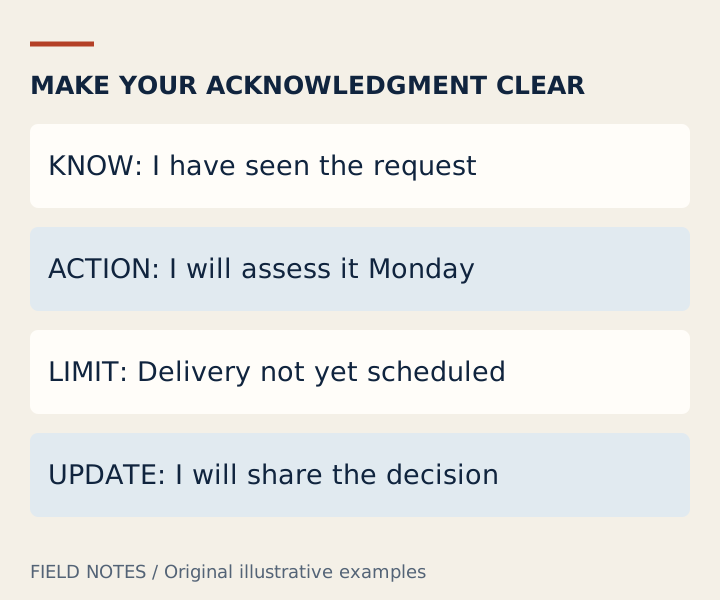
If someone needs a plan, replace a bare acknowledgment with what you actually know. “I have seen the request and will assess it at Monday's planning meeting” states a review commitment, not a delivery promise. “I can review it tomorrow but cannot implement it this week” separates two different actions. “I have not scheduled it yet” is useful when that is the truth.
An on my radar synonym might be “I am aware of it,” “I am considering it” or “I am tracking it.” These are not identical. Tracking suggests ongoing observation, while awareness may only describe having noticed the subject. Choose the expression that matches your actual involvement.
Use “put this on your radar” when you want to draw someone's attention to something. Add why it matters and whether you are asking for action. For brief contact, use a focused check-in; for returning to an earlier topic, circle back with context. The broader LinkedIn Speak guide explains how familiar expressions can omit timing or ownership. Use it for context, but answer the immediate request in your own message.
Questions about on my radar meaning
Is it on my radar or in my radar?
For this idiom, “on my radar” is the usual form. The radar is a metaphor for attention or awareness. “In my radar” is not the normal expression for acknowledging a work topic.
What does off my radar mean?
It generally means outside someone's awareness or attention. “That fell off my radar” may acknowledge that the person lost track of it. The phrase does not by itself explain why or establish what repair is now planned.
Is under the radar the opposite?
Not exactly. “Under the radar” commonly describes something escaping notice or receiving little attention. “Off my radar” describes the speaker's awareness. Avoid swapping them automatically in a summary.
Does on my radar meaning change in slang or dating?
The broad awareness metaphor can apply to a person, an interest or an opportunity outside work. That does not justify reading romantic interest into a professional message. Use the actual context and do not treat an informal dictionary entry as proof of someone's intentions.
Sources and scope
Definitions are grounded in the sources below. Dialogues and illustrations are original teaching examples, not quotations, customer results or claims about anyone’s intentions. This independent guide does not represent LinkedIn.