
The language field guide / 04
Close the Loop Meaning: Examples and Follow-Up
Do the work. Return the result. Confirm what remains.
Editorial guide ·
Go to worked examples ↓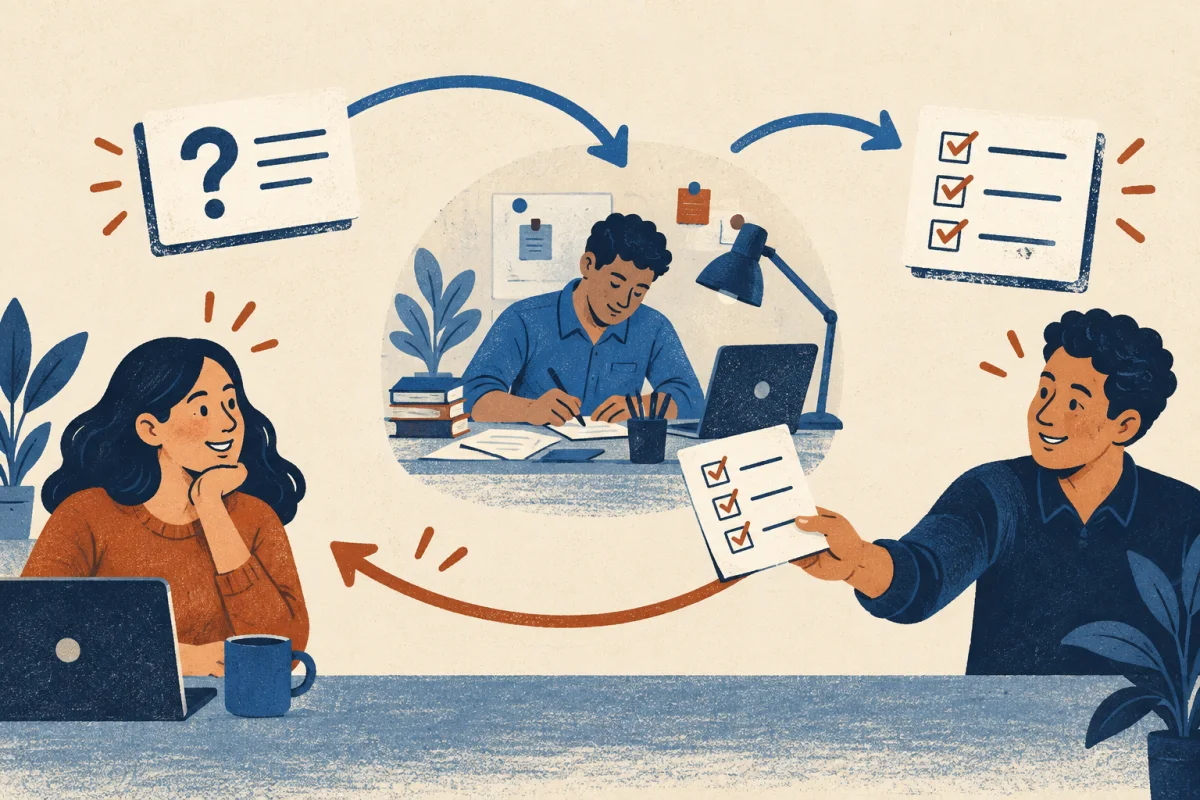
Close the loop meaning in workplace communication
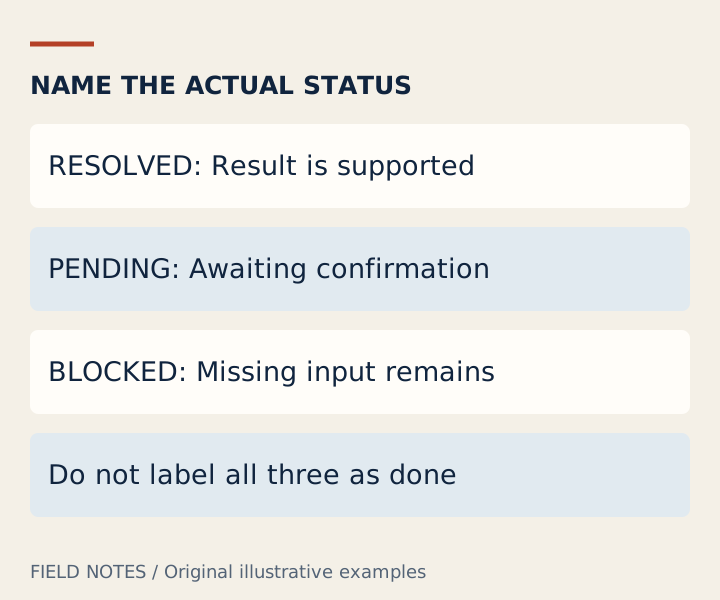
The close the loop meaning in a work conversation is to follow up on an outstanding matter so the relevant people know its outcome or current disposition. Doing the work is part of the process. Returning the information to the person who needs it is another part. A fix that nobody knows about can leave the original question effectively open.
For example, somebody reports that an onboarding document contains an outdated link. You correct it, then tell the requester which version was updated and ask them to confirm that it opens. The edit is the action; the return message connects that action to the original request.
This guide uses close the loop meaning in communication, not the recycling or engineering senses of a closed loop. It also avoids treating every status update as proof of completion. If an issue is still blocked, explain the blocker and next checkpoint rather than labeling it resolved.
Choose the accurate status before writing
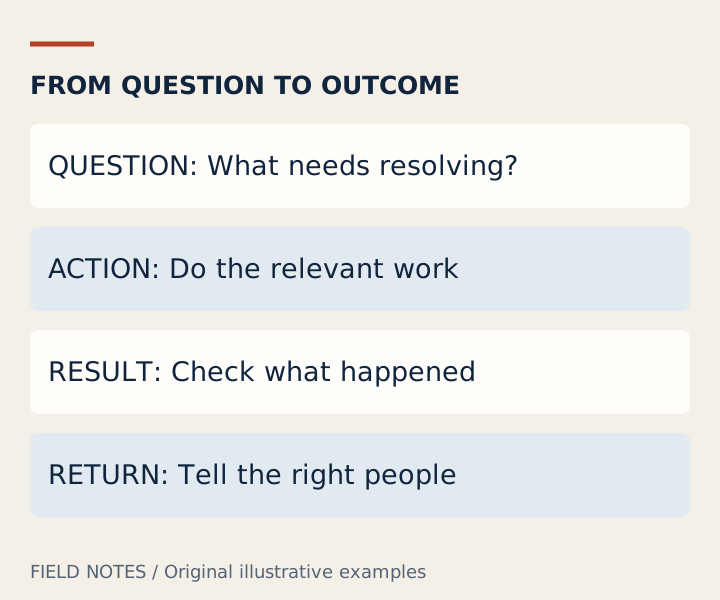
Applying close the loop meaning requires checking what actually happened. A message that confidently says “all done” can create a new misunderstanding if the work is only partly complete. Separate three common states: resolved with a result, implemented but awaiting confirmation, and not resolved with a next step.
In the first state, you have completed the relevant action and have suitable evidence of the result. Tell the requester what changed and where to find it. In the second, you have taken the action but still need a recipient's check. Make that request explicit and keep the status open if confirmation is part of your process.
In the third state, you may be able to close a particular question—for example, whether a request was received—without closing the underlying problem. Name that distinction. “I received the request and will investigate tomorrow” acknowledges it, but does not mean the investigation has finished.
The phrase is useful only when the surrounding message supplies this precision. Understanding close the loop meaning should help you select an honest status, not add a reassuring label to incomplete work. If your team uses a formal workflow, use its status definitions rather than silently inventing a new closure rule.
Three outcome messages you can adapt
These fictional examples demonstrate close the loop meaning in email and team messages. They pair the action with a clear result or limitation. Use facts from your own task; the names, timing and documents here are illustrative.
Resolved: return the result and its location
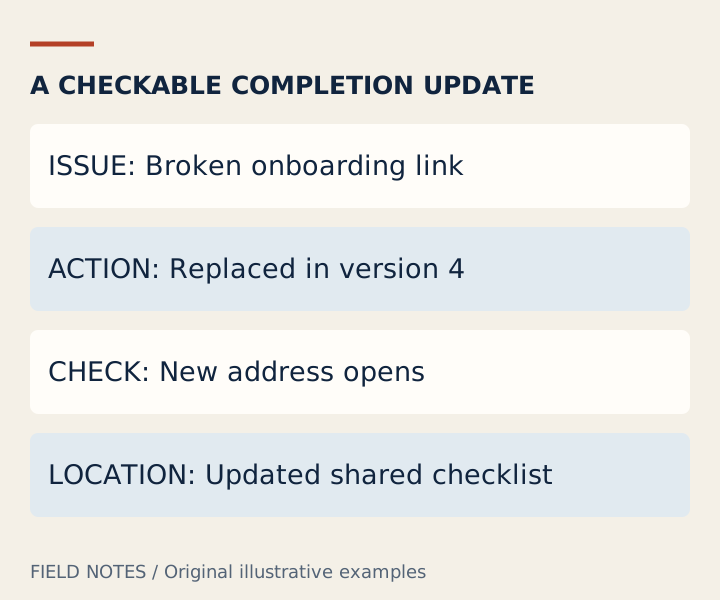
Message: “To close the loop on the broken onboarding link: I replaced it in version 4 of the checklist and checked that the new address opens. The updated checklist is in the shared folder. No action is needed from you unless you find the old link elsewhere.”
Reply: “Thanks. I have the updated checklist and will use version 4 for the next session.”
The message states the original issue, the completed change, the check performed and where the requester can find the result. It does not claim that every copy across the organization has been corrected. The recipient can understand what is finished without searching the entire conversation.
This is the close the loop meaning at its most practical: return useful information, not merely “done.” A short message is enough when it includes the right facts. Attachments, screenshots or links are helpful only when the recipient can access them and they genuinely support the claimed result.
Awaiting confirmation: say what remains open
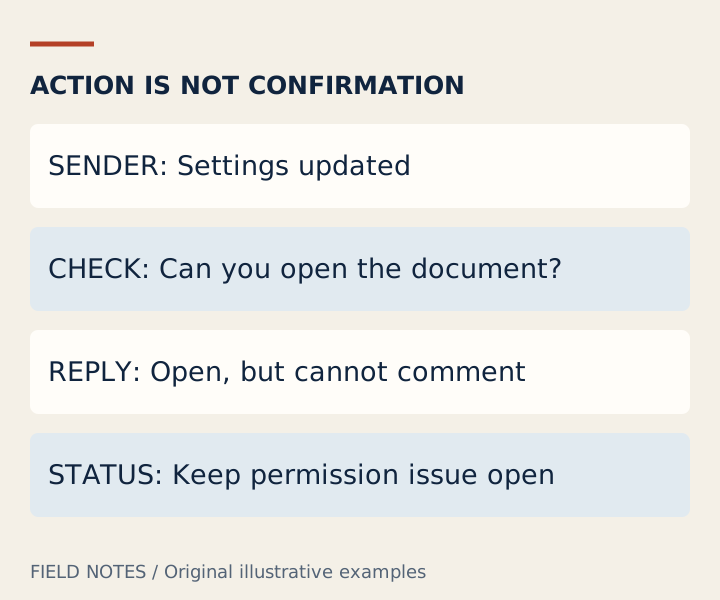
Message: “I updated the invitation settings and checked them on my side. Could you confirm whether you can now open the review document? I am keeping the access issue open until you have tested it.”
Reply: “I can open the document now, but I cannot leave comments. Please keep the issue open while we check that permission.”
The sender distinguishes an implemented change from a confirmed outcome. The recipient's reply supplies new evidence instead of being forced to accept a premature completion claim. The next action is narrower: check comment access, rather than repeat the entire initial investigation.
When using close the loop meaning around permissions or delivery, remember that your own view may differ from the other person's. A file can exist and still be inaccessible. A sent message can leave a question unanswered. State the specific check needed rather than assuming success from an intermediate step.
Blocked: complete the update, not the task
Message: “An update on the missing export: the first recovery attempt did not restore it. I need the original reference number before trying the next option. Please send that number if available; otherwise I will ask the account owner tomorrow and update this thread afterward.”
Reply: “I do not have the reference number. Please contact the account owner and let us know whether the export can be recovered.”
This message does not close the unresolved task. It does complete a useful feedback step by naming the failed attempt, missing input, next owner and next contact point. That is better than hiding the uncertainty behind the phrase “closing the loop.”
The close the loop meaning must not erase an outstanding problem. If a request is being declined rather than completed, say that directly, give the appropriate explanation and identify any available next route. A clear disposition is different from claiming the requested result was achieved.
Build a short, checkable return message
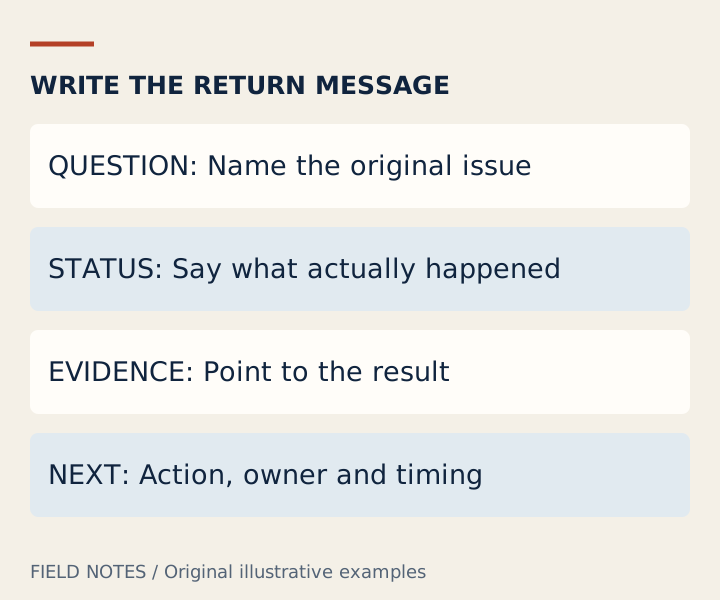
Start with the original question in a few words. State the outcome or current status. Name the evidence or location where appropriate. Finish with the remaining action, its owner and timing—or say that no further action is needed. You do not need all five elements in every sentence, but the recipient should not have to infer the important ones.
Before sending, compare the message with the actual record. Does “published” mean visible to the intended audience? Does “reviewed” mean somebody supplied feedback, or merely that a meeting occurred? Accurate verbs are more valuable than a polished closing phrase. Keep confidential evidence in the appropriate channel rather than broadcasting it to prove completion.
For a close the loop synonym, use “share the outcome,” “confirm the result” or “follow up with the decision,” depending on what happened. If you are instead including a new person, the loop in guide explains that different task. Circling back revisits an earlier topic without necessarily resolving it. The broader LinkedIn Speak dictionary helps distinguish other follow-up expressions.
Questions about close the loop meaning
Does close the loop mean the problem is fixed?
Often the phrase accompanies resolution, but read the actual update. It might communicate a decision, a declined request or the end of one review stage. A vague closing sentence is not evidence that every issue was fixed.
Can I write “to close the loop on this”?
Yes, but name the subject if several matters are active. “To close the loop on the missing link” is easier to follow than “on this.” Then give the result rather than relying on the phrase alone.
Is close the loop meaning the same as loop in?
No. Looping someone in includes or informs them. Closing the loop returns an outcome or disposition to the relevant people. You may need both actions at different moments, but one does not prove the other happened.
Do I need a meeting to close a loop?
Not necessarily. A clear, accessible written update may be enough. Choose a conversation when the result needs discussion or a decision; do not schedule a meeting solely to make a simple confirmation sound more formal.
Sources and scope
Definitions are grounded in the sources below. Dialogues and illustrations are original teaching examples, not quotations, customer results or claims about anyone’s intentions. This independent guide does not represent LinkedIn.