
The language field guide / 08
Touch Base Meaning: Email Examples and Better Replies
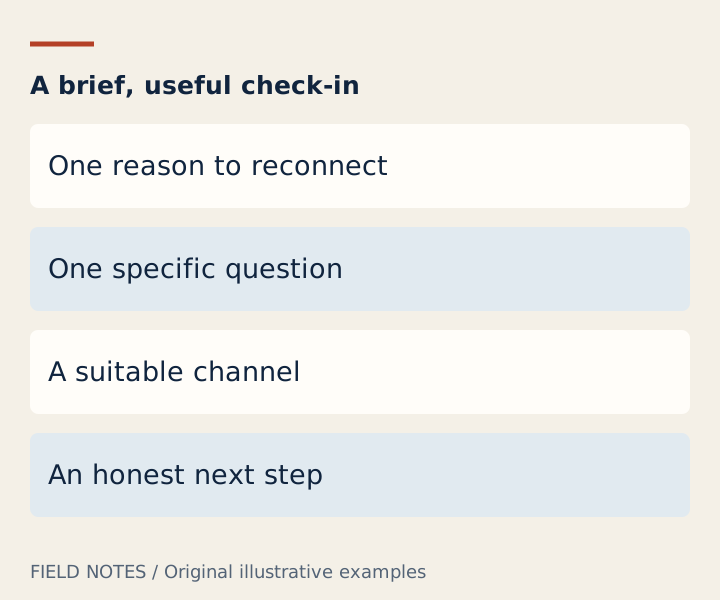
A brief check-in works better with a specific question.
Editorial guide ·
Go to worked examples ↓
Touch base meaning in a professional message
The touch base meaning is to make brief contact with someone, often to exchange an update or check how something is going. It can refer to an email, a message, a short call or a conversation. The phrase does not require a meeting and does not itself specify what the other person should do.
“Let's touch base next week” proposes contact. It leaves the subject, channel and exact time open. “Could we touch base about the review comments on Tuesday?” supplies a topic and a proposed time. The second version is easier to respond to because the reader can see the purpose of the contact.
This guide applies touch base meaning to everyday work conversations and professional direct messages. You will find complete examples for reconnecting, checking shared work and replying without new information. The goal is a short exchange that does something useful, not a polished sentence that leaves the reader guessing.
Touch base meaning versus a follow-up
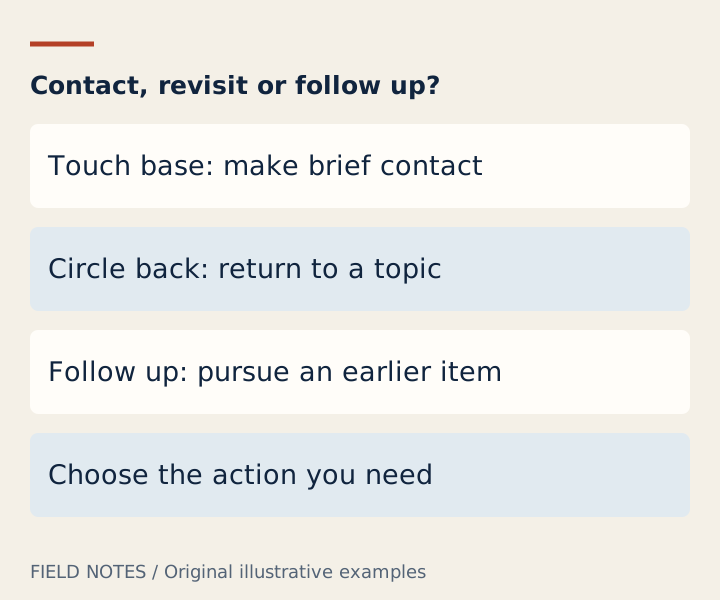
Touch base meaning emphasizes brief contact. “Circle back” emphasizes returning to a previously discussed topic. “Follow up” can describe seeking an answer, continuing after an event or checking progress on an earlier action. These expressions overlap, but they do not make every message equivalent.
If you simply want to hear how a colleague's first week went, a short check-in fits. If you need a promised document, name that document and ask about the agreed timing. Avoid disguising a specific request as casual contact if the recipient needs to make a decision or do substantial work.
For touch base meaning in business, the length and formality should follow the actual task. A brief email can be appropriate when one answer is enough. A short call can help when both people need to compare options. Do not call a complex review “a quick touch base” if it needs preparation and an extended discussion.
The expression also does not create permission to repeatedly contact someone. Consider the existing relationship, any agreed response window and whether your message adds useful information. A concise message can still feel demanding if it arrives repeatedly without a reason or ignores a stated boundary.
Three short exchanges with a clear purpose
The following fictional dialogues demonstrate touch base meaning in a sentence and in a complete exchange. Adapt the actual topic and relationship. Do not copy an invented deadline or imply a prior conversation that never happened.
Reconnect without hiding a request
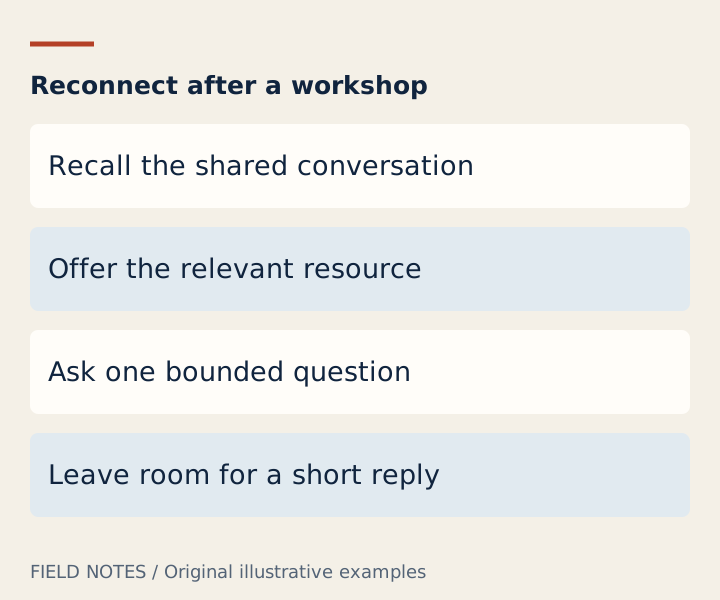
Message: “Hi Alex, I wanted to touch base after our workshop conversation. You mentioned testing a new onboarding guide. How did the first session go? No need for a detailed report—I would be interested in one thing you learned.”
Reply: “Thanks for checking in. We learned that the opening instruction needs a clearer example. We have not tested the revised version yet.”
This message refers to a real shared context within the fictional example and asks one bounded question. The reply can be short while still supplying useful information. It does not have to turn into a meeting or an agreement to collaborate.
The touch base meaning fits because the purpose is a brief exchange. If you actually want to propose a project, say so in the message rather than using a friendly opener to conceal the larger request. Clear intent helps the other person choose an appropriate response.
Check shared work before the next handoff
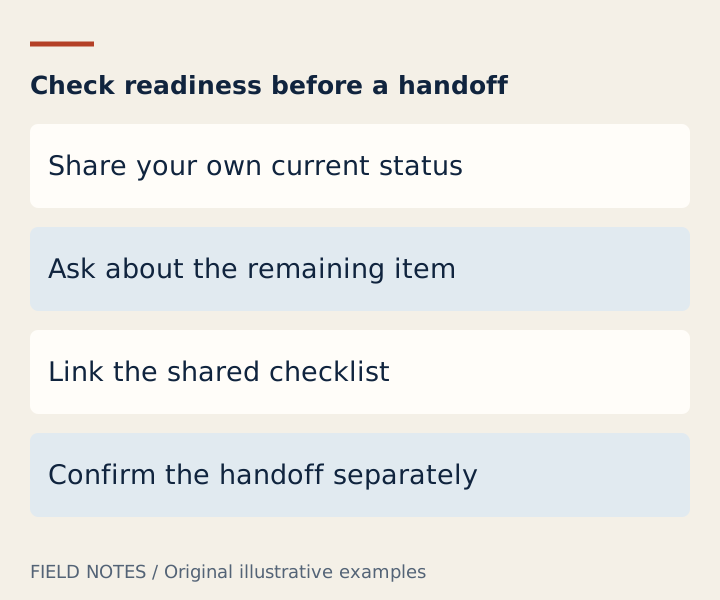
Message: “Could we touch base about the review checklist before tomorrow's handoff? I have updated the first section. Is the final section ready, or is there anything blocking it? A reply here is enough unless we need to discuss an issue.”
Reply: “The final section is ready except for the document link. I will add the confirmed link this afternoon and reply when it is in place.”
The sender provides their own status before asking for the other part. That makes the request collaborative rather than a vague demand for progress. The reply names the remaining work and a next update; it does not describe the whole checklist as finished too early.
Applying touch base meaning this way can keep a short exchange short. The channel is already available, and a meeting is only needed if the answer reveals something that requires discussion. If the proposed timing is not possible, the recipient should state an alternative rather than silently accept it.
Reply when nothing has changed
Message: “Just touching base on the draft—any news?”
Reply: “No new feedback yet. The review is still scheduled for Thursday, so I expect to have an update afterward. I will message you then; there is nothing you need to do before that.”
This reply is honest without sounding dismissive. It distinguishes no new information from no work taking place, gives the existing checkpoint and removes an unnecessary action. If there is no known review date, say that instead of inventing one to make the response feel complete.
Touch base meaning does not require a positive development every time somebody checks in. A clear statement that the situation is unchanged can be the useful result. If repeated follow-ups are interrupting work, you can propose a mutually suitable update schedule without accusing the sender of bad intentions.
Apply touch base meaning to your message
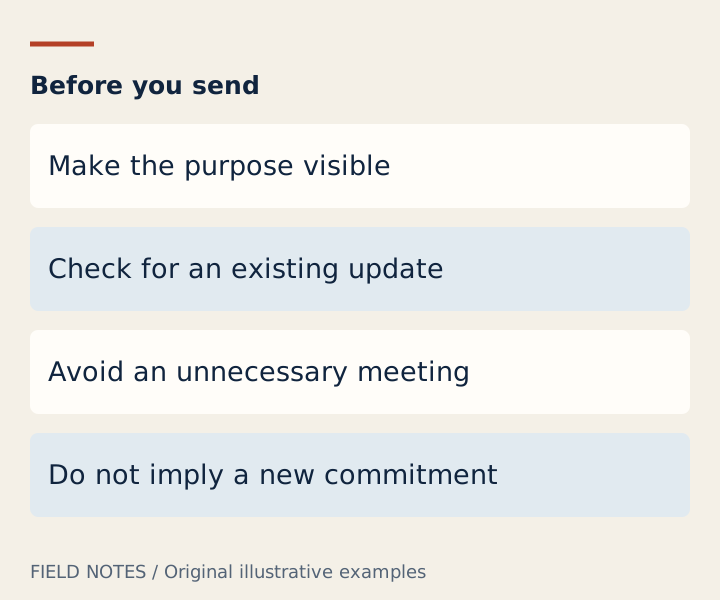
Start with why you are reaching out now. Add the relevant context in one sentence. Then choose one question, one update or one proposed next action. If no response is required, say so. If timing matters, state the real timing and whether it is proposed or already agreed.
For touch base meaning in your own writing, remove empty cushioning before removing useful context. “Just quickly touching base to see if there might perhaps be an update” can become “Is there an update on the review comments?” The shorter version is not rude when the context and relationship support it.
A touch base synonym may be “check in,” “get in touch” or “exchange a quick update.” “Meet” is narrower because it assumes a conversation at a shared time. “Approve” is not a synonym. If you need a decision, ask for the decision rather than hoping it is implied by a friendly contact phrase.
The on my radar guide can help when the reply confirms awareness but not timing. The broader LinkedIn Speak dictionary supplies related expressions. These are optional explanations; your message should still contain enough context to answer without sending the reader elsewhere.
Questions about touch base meaning
Is it touch base, touch bases or touch basis?
For this idiom, use “touch base.” The alternatives “touch bases” and “touch basis” are not the usual form. The past tense is “touched base,” and the ongoing form is “touching base.”
Does touch base meaning imply a meeting?
No. Brief contact can happen by message, email or a call. If you want a meeting, name the topic, suggest the duration and ask about availability. Do not assume the phrase provides those details.
Is it too informal for a work email?
It is common in professional conversation, but a more direct phrase may be clearer for a new audience. “Could you send an update on the review?” states the task immediately. Choose clarity rather than formality for its own sake.
What does a touch base meeting need?
A clear purpose and a manageable scope. State which updates or questions belong in the conversation. If the task requires a decision, substantial preparation or a long review, describe that work accurately instead of implying an effortless chat.
Sources and scope
Definitions are grounded in the sources below. Dialogues and illustrations are original teaching examples, not quotations, customer results or claims about anyone’s intentions. This independent guide does not represent LinkedIn.