
The language field guide / 02
Take This Offline Meaning: Examples and Replies
Move the discussion. Keep the next step visible.
Editorial guide ·
Go to worked examples ↓
Take this offline meaning in a work conversation
The usual take this offline meaning is “continue this discussion outside the current meeting or conversation.” The next conversation might still happen online. A smaller video call, a direct message or a separate email thread can all be the next venue. The phrase changes the setting or audience; it does not necessarily change the technology.
Suppose a planning call turns into a detailed debate about implementation. Someone says, “Let's take this offline.” They may be asking the relevant people to work through that detail separately so the larger meeting can continue. The sentence alone does not tell you who should organize the discussion, when it will happen or whether the group will hear the conclusion.
The practical take this offline meaning therefore has two parts: understand the request to move the discussion, then clarify the missing arrangement. You do not have to guess the speaker's motive. Ask about the next channel and the outcome that should return to the original group.
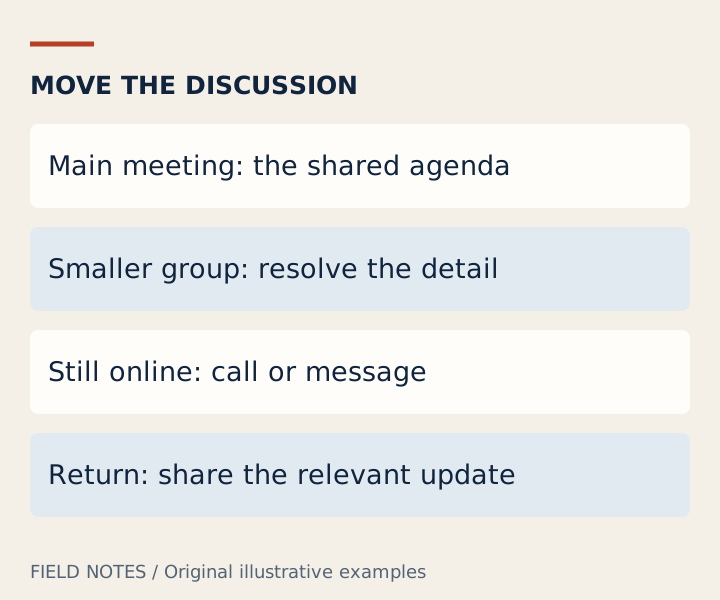
Offline does not necessarily mean disconnected or secret
In everyday technology, offline can mean not connected to a network. In workplace conversation, it often means outside this discussion. These meanings coexist. If the context is a broken connection, the technical sense may apply. If people are deciding where to discuss a topic, the conversational sense is more likely.
For take this offline meaning in work, look at what came immediately before the phrase. Was someone describing a network problem, or asking a group to stop debating a detail? Context helps you choose the relevant sense. If the distinction still matters, a plain question is appropriate: “Do you mean a separate call, or should I send you a message?”
Privacy is another separate issue. Moving a conversation does not automatically make it confidential, authorize sharing restricted information or exclude people who need the outcome. A smaller discussion may help with relevance or sensitivity, but the participants still need to respect the information's actual sharing rules.
It can also be reasonable to ask whether an unresolved issue must remain visible. A discussion about a dependency that affects everyone's deadline should not disappear simply because it moved to another channel. Confirm who will summarize the outcome and where the record will live.
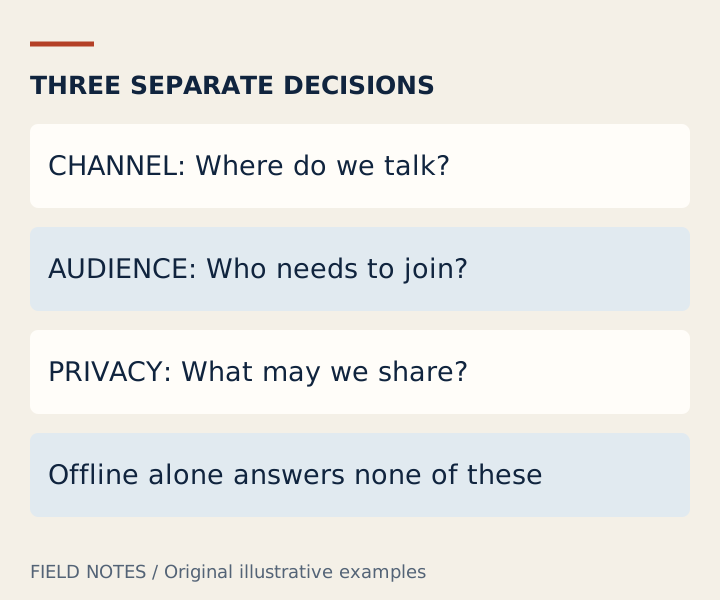
Three conversations, with usable replies
These fictional examples apply the take this offline meaning without assuming hostility or agreement. Replace the topic, names and timing with your real situation. Keep any uncertainty that remains.
Online meeting: move a technical detail
Request: “Let's take this offline so we can finish the planning agenda.”
Reply: “Sure. I'll arrange a short call with the two reviewers tomorrow. We'll compare the options and post the recommendation in this thread before Friday's review.”
This reply accepts the change of venue and supplies a clear next step. It does not promise a final decision if the smaller group only has authority to recommend one. If you cannot organize the call, say so and ask who will own it instead of silently accepting responsibility.
The take this offline meaning is especially easy to misread when everyone is already working remotely. Here “offline” does not require an office, a landline or a face-to-face meeting. The smaller call can use the same software as the original meeting.
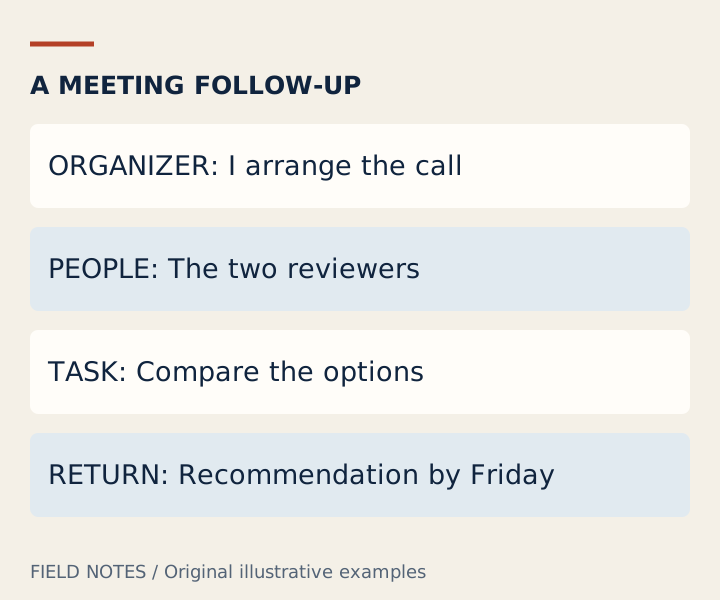
Group thread: clarify the channel
Request: “I'll take this offline with you.”
Reply: “Thanks. Would you prefer a direct message or a separate call? The question I need to resolve is which draft the team should review. Once we agree, I can post that reference here.”
This is a useful response when the person has offered to continue privately but has not specified how. It narrows the question without forwarding the entire thread or sharing unnecessary material. It also preserves a route back to the people affected by the answer.
If you are looking for a take it offline synonym, “discuss this separately” is often clearer. “Continue in a smaller group” makes the audience change explicit. “Pick this up after the meeting” specifies timing but still leaves the channel open. Choose the version that actually describes your plan.
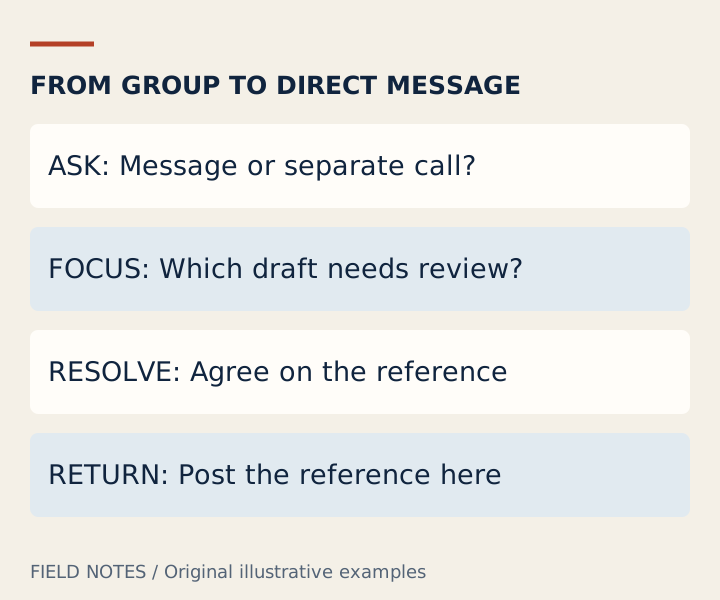
Sensitive topic: keep the right boundary
Request: “Let's take this offline; there are details we should not discuss here.”
Reply: “Understood. Please let me know the appropriate participants and channel. For this group, can we still confirm whether the current deadline is affected?”
This reply respects the stated boundary while asking for the operational information the wider group needs. It does not demand private details or assume that moving the conversation is an attempt to conceal a mistake. If the speaker cannot answer immediately, agree on when a shareable update will follow.
Understanding take this offline meaning does not settle whether a particular discussion should be private. That depends on the topic, responsibilities and relevant policies. When in doubt, ask the responsible person about the process rather than treating the idiom as permission.
Make the next step explicit
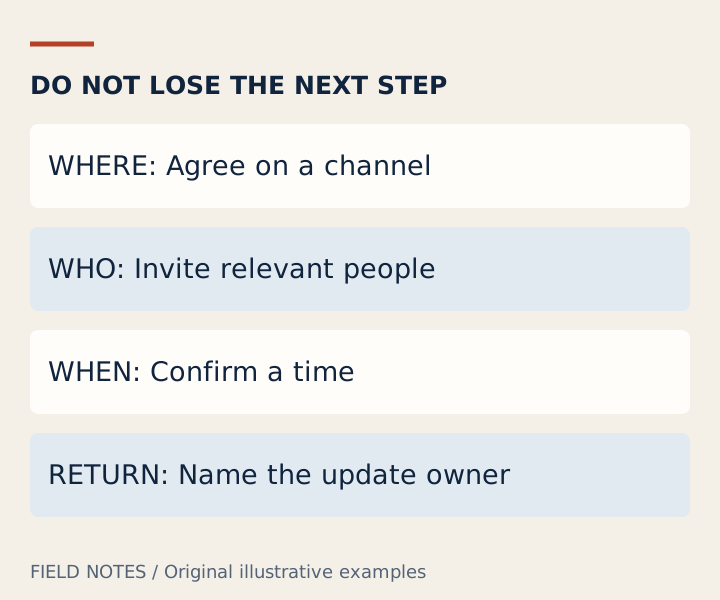
Before leaving the original conversation, check four things: channel, participants, timing and report-back. You do not need a formal meeting invitation for every small issue. You do need enough agreement that the topic will not be lost and the necessary people know what happens next.
Use this fill-in pattern: “Let's discuss [specific question] in [channel] with [people] by [time]. [Owner] will share [decision, recommendation or remaining question] in [original location].” The brackets are information to supply, not facts the guide can know for you. If a date is only proposed, label it as a proposal.
The take this offline meaning points to moving the discussion; it does not establish that the issue has been resolved. Afterward, close the communication loop by sending the agreed update. The LinkedIn Speak guide also explains follow-up language if you need help distinguishing an invitation, a status update and a completed task.
Questions about take this offline meaning
What does take this offline mean in an email?
Usually it means continuing outside the current email thread, perhaps with fewer participants. It does not inherently require a phone call. Ask which channel the sender prefers and whether the group needs a summary afterward.
What is the discussed offline meaning?
“Discussed offline” normally describes a conversation that already happened outside the current setting. “Let's take this offline” proposes a future conversation. Neither phrase tells you its conclusion. Ask for the shareable result if it affects your work.
Is it a polite way to say stop talking?
It can be used to end the current discussion, but that does not prove a negative motive. A useful interpretation of take this offline meaning stays close to the stated request. If you are concerned about losing an important question, agree on a concrete follow-up rather than guessing intent.
Can I say it to somebody senior?
You can suggest a separate discussion respectfully: “Would it help to discuss the implementation separately after this call?” That offers a practical reason and leaves room for the other person to choose. Adjust the wording to the relationship and meeting responsibilities.
Sources and scope
Definitions are grounded in the sources below. Dialogues and illustrations are original teaching examples, not quotations, customer results or claims about anyone’s intentions. This independent guide does not represent LinkedIn.