
The language field guide / 10
Low Hanging Fruit Meaning: Examples and Priorities
Easy to do is a starting point—not the whole decision.
Editorial guide ·
Go to worked examples ↓
Low hanging fruit meaning in everyday work
The usual low hanging fruit meaning is an opportunity or task that is relatively easy to take or complete. The image comes from fruit that can be reached without climbing. In a business conversation, the phrase often suggests starting with accessible improvements before attempting harder work. It does not automatically mean those improvements are the most valuable.
“Let's start with the low-hanging fruit” leaves an important question unanswered: easy relative to what? Correcting a confirmed typo may be simple. Changing a short sentence that contains an unverified product claim may require investigation. Surface size is not a reliable measure of effort, risk or impact.
This guide applies low hanging fruit meaning to practical prioritization conversations. It helps you separate a genuine quick improvement from a low-value distraction or a task with a hidden dependency. The examples are fictional work situations, not measured business results or a promise that one prioritization method will fit every team.
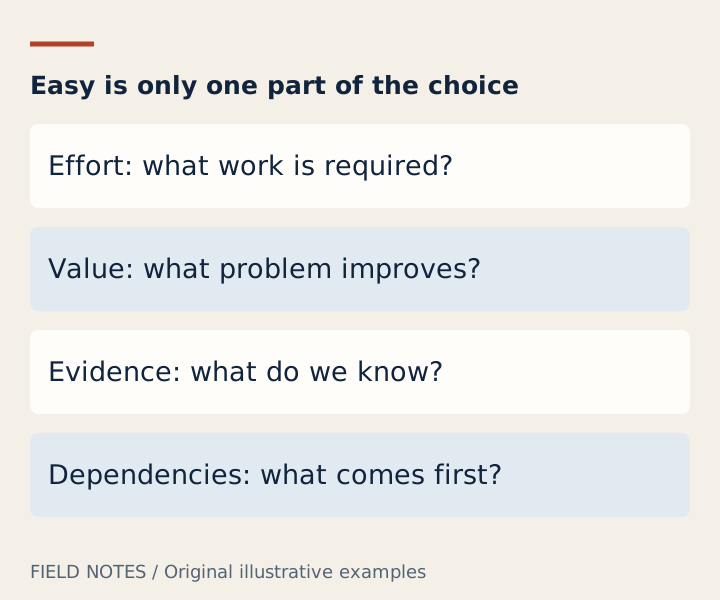
Check value as well as effort
For low hanging fruit meaning in business, consider four questions. What problem does the task address? What useful change should it produce? What work is actually required? What must be checked or completed first? A task becomes a stronger candidate when those answers are concrete and proportionate to its size.
An easy cosmetic edit can be worthwhile, but it should not automatically displace a more important repair. Equally, a task does not become strategic merely because it is difficult. Compare the expected contribution to the current goal, and state when that contribution is only a hypothesis rather than an observed result.
Low hanging fruit meaning describes accessibility, not permission to skip review. A minor wording change may still need the author's confirmation. A small software change may still need testing. Include required checks in the effort estimate rather than calling the task easy first and discovering the real workload afterward.
The move the needle guide separates completed activity from demonstrated outcomes. Use that distinction when reporting a quick win. The boil the ocean guide addresses narrowing scope; reducing scope and selecting easy work are related decisions, but neither justifies dropping a necessary dependency.
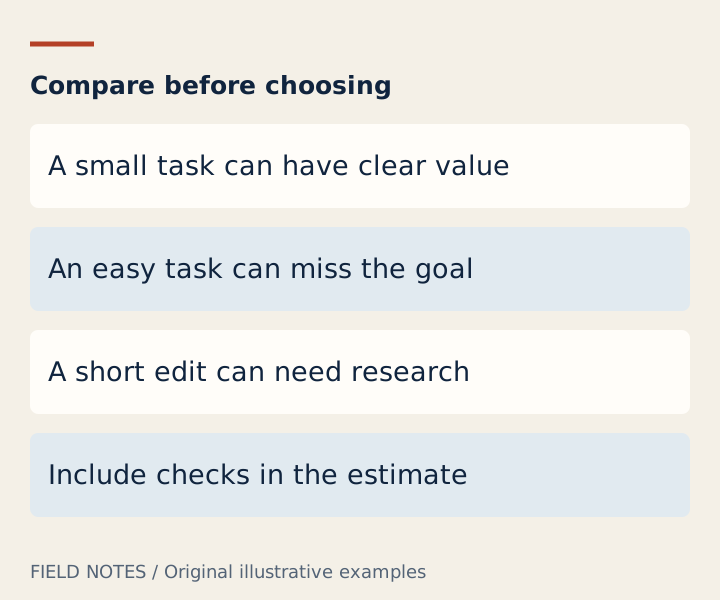
Three practical prioritization conversations
These exchanges demonstrate low hanging fruit meaning through a useful quick correction, an attractive distraction and a hidden prerequisite. Read the reasoning after each reply before borrowing the wording. Replace every example detail with your own known facts.
A small correction with a clear purpose
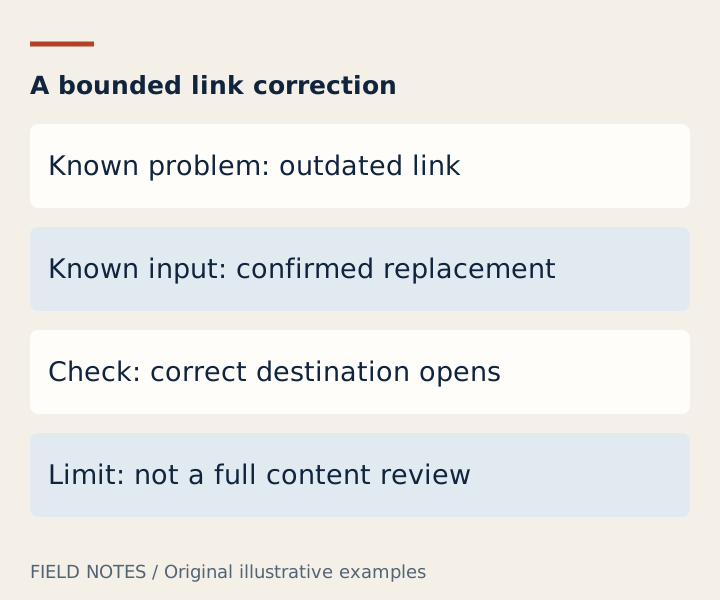
Message: “The outdated link in the onboarding checklist looks like low-hanging fruit. We already have the confirmed replacement. Can we update the link and check that it opens the correct document?”
Reply: “Yes. I can make that correction and verify the destination. I will report the link as fixed, but we have not checked whether the rest of the checklist needs changes.”
The task has a bounded scope, a known replacement and a simple acceptance check. It addresses a specific problem without making a claim about broader onboarding outcomes. The reply also prevents the small repair from being mistaken for a review of the entire document.
This is a useful low hanging fruit meaning example because the accessibility has a reason: the missing information is already available. If the replacement link were uncertain, finding the correct destination would be part of the work. Do not copy the estimate from one situation into another with different facts.
An easy task that does not address the priority
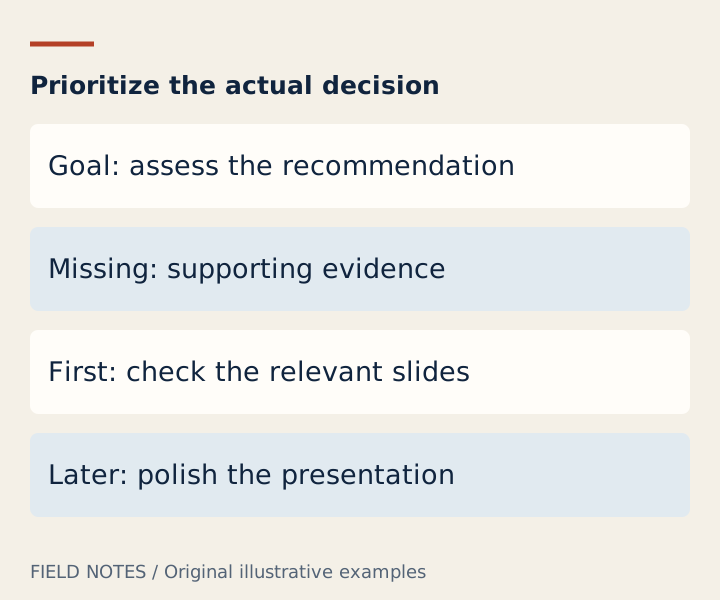
Message: “We could spend the afternoon changing the presentation icons. It is low-hanging fruit, and the deck would look more consistent.”
Reply: “That may improve consistency, but the review question is whether the recommendation is supported. Could we check the evidence slides first and leave the icon changes for the final polish?”
The reply does not claim that presentation quality is worthless. It compares the proposed task with the immediate decision. If the recommendation lacks support, consistent icons will not supply the missing evidence. The group can still schedule visual polish after the substantive issue is addressed.
Understanding low hanging fruit meaning helps you recognize why easy work feels appealing without treating it as inherently wrong. Ask what it advances. If the goal is specifically visual consistency for an approved deck, the same icon task could be appropriate. Priority depends on the actual purpose, not a permanent ranking of task types.
A small-looking edit with a hidden dependency
Message: “Adding that new capability to the product summary should be low-hanging fruit. It is only one sentence.”
Reply: “The sentence is short, but I have not confirmed the capability is available to all users. Let's check the release status and any limits before updating the summary. The wording change comes after that confirmation.”
Here the visible edit is small, but the claim needs verification. The reply identifies the missing fact and the order of work without exaggerating the task into a major project. If the capability has restrictions, those restrictions belong in the final description rather than being omitted to keep the sentence neat.
Low hanging fruit meaning should not hide this prerequisite. A reliable estimate includes the work needed to make the change accurate. When confirmation is already available, the task may become straightforward; until then, label the uncertainty instead of presenting an unsupported claim as an easy improvement.
Use low hanging fruit meaning in a clear task note
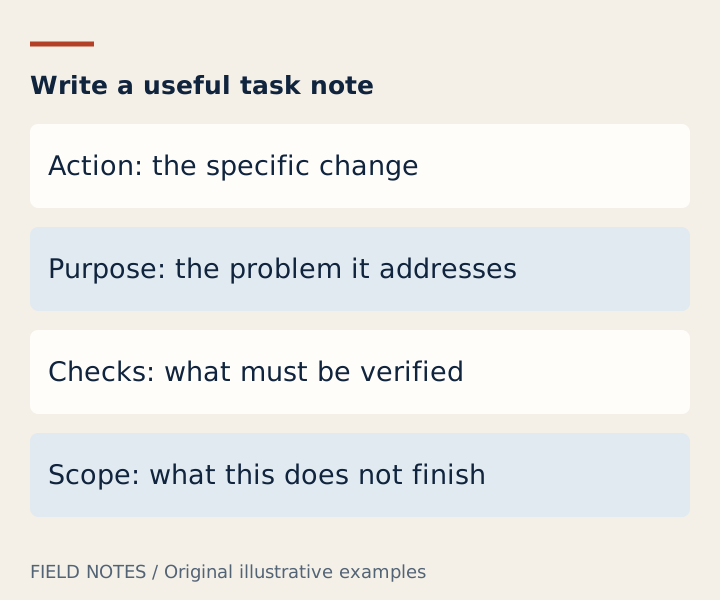
Write the proposed action, the reason it matters, the known effort and the acceptance check. Add dependencies or unknowns separately. “Replace the confirmed outdated link and verify the destination” gives a colleague more useful information than “do some quick wins.” A concise task can still preserve the important limits.
When applying low hanging fruit meaning to a list of opportunities, avoid treating the first round as the whole strategy. Accessible improvements may run out. Keep the harder work visible, especially when it is necessary for the main objective. Finishing several small tasks does not prove that the central problem has been solved.
A suitable alternative might be “straightforward improvement,” “easy first step” or “quick correction.” Choose the phrase that matches what you know. “High-impact change” is not a synonym unless the impact is supported. “No-risk change” is a much stronger claim and should not be inferred from a short estimate.
Questions about low hanging fruit meaning
Does low hanging fruit meaning imply low quality?
No. Easy work can be valuable and carefully executed. The phrase describes relative accessibility, not the quality of the result. Judge the actual task and its checks.
Should I use hyphens?
The idiom is commonly written “low-hanging fruit,” with a hyphen joining the words that describe the fruit. Search queries often omit it. The practical meaning is the same in this guide.
Is it a good phrase for people?
Prefer describing the opportunity or task. Calling people low-hanging fruit can sound dismissive or transactional. A specific description of the work is clearer and more respectful.
What should come after quick wins?
Review the remaining work against the main objective, including necessary harder tasks. For related workplace expressions, visit the LinkedIn Speak dictionary. A helpful metaphor should support a decision, not replace the reasoning behind it.
What is high-hanging fruit?
As a contrasting metaphor, it suggests opportunities that are harder to reach. More effort does not automatically mean more value. Name the actual obstacles and expected contribution instead of relying on the metaphor alone.
Sources and scope
Definitions are grounded in the sources below. Dialogues and illustrations are original teaching examples, not quotations, customer results or claims about anyone’s intentions. This independent guide does not represent LinkedIn.