
The language field guide / 07
Boil the Ocean Meaning: Scope and Work Examples
Make the first step smaller—not incomplete.
Editorial guide ·
Go to worked examples ↓
Boil the ocean meaning in a work request
The boil the ocean meaning is to attempt something excessively broad, difficult or impractical for the task at hand. At work, “don't boil the ocean” often asks people to narrow their scope instead of trying to solve everything at once. The phrase is a warning about the size or approach of the task, not a complete plan for what to do instead.
Suppose you are asked to answer one customer question and begin proposing a rewrite of the entire support library. A colleague might say, “Let's not boil the ocean.” They may want a smaller first deliverable. You still need to agree on which question to answer, what evidence is enough and which related work can wait.
Understanding boil the ocean meaning can help you ask those questions constructively. It does not mean quality, safety or necessary dependencies are optional. A smaller task should remain capable of meeting its purpose. Reducing scope is useful only when you know what must stay inside it.
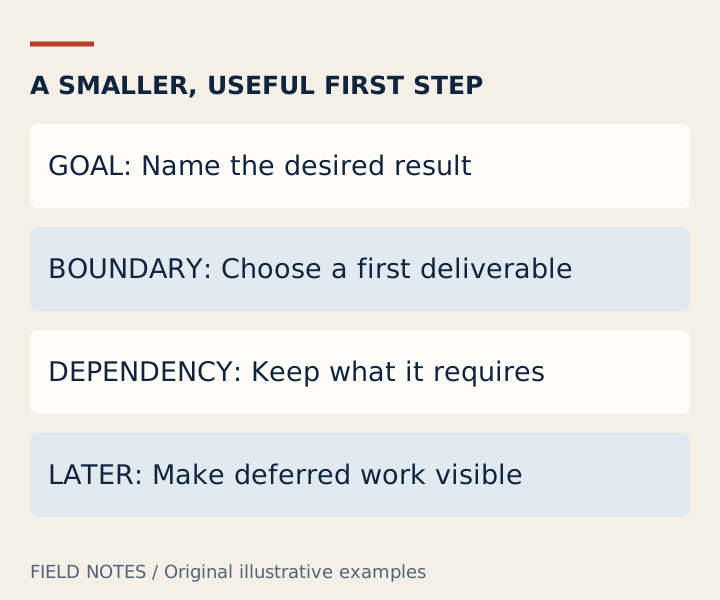
Narrow the work without ignoring the system
In business conversations, boil the ocean meaning commonly concerns overambition or unnecessary breadth. But a complicated project may have connected parts that cannot be ignored. Before removing work, ask whether the omitted piece is optional, can be deferred or is a prerequisite for the smaller deliverable.
For example, reducing a review to one document may be sensible. Skipping the permission needed to share that document is not the same kind of reduction. The first changes the deliverable's scope; the second may stop the deliverable from being usable at all. Name the dependency instead of dismissing it as extra detail.
It is also possible for the phrase to end a useful question too quickly. If somebody raises a genuine issue, clarify how it affects the chosen outcome. You can agree not to investigate every possible improvement while still preserving a specific risk or unresolved prerequisite.
A careful application of boil the ocean meaning therefore asks two questions together: what is the smallest useful result, and what must be true for that result to work? Neither question alone is enough. A tiny deliverable with no value is not progress merely because it is easy to finish.
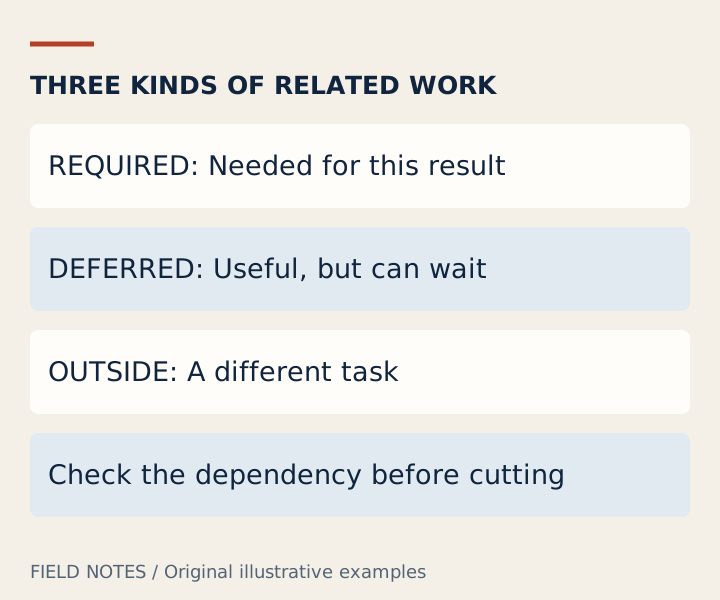
Three scope conversations
These fictional examples apply boil the ocean meaning to research, cross-team work and a necessary dependency. They show how to replace a slogan with a concrete agreement. Adapt the facts rather than treating the example's scope as a universal project method.
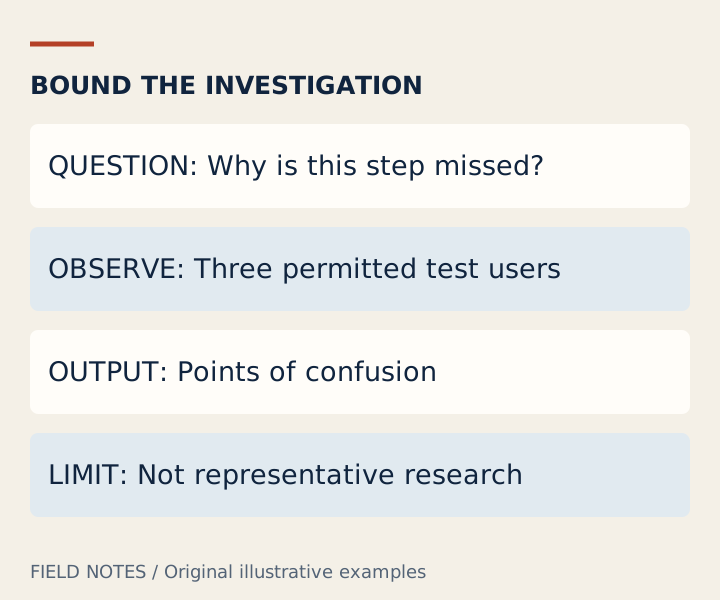
Research: answer the immediate question
Request: “Can you find out why new readers miss this setup step?”
Overbroad response: “I'll review every article, interview the whole company and redesign the documentation structure.”
Bounded response: “For the first pass, I'll review the setup page and watch three permitted test readers follow that step. I'll report the observed points of confusion. A full documentation redesign is outside this first deliverable.”
The smaller response identifies a question, an observation method and a defined output. It does not promise representative research from three readers. The observation can inform the next decision without claiming to explain every user's behavior or resolve the entire information architecture.
Here boil the ocean meaning is not “do shallow research.” It is “match the initial investigation to the question, and state its limits.” If the initial evidence reveals a wider dependency, record it for a deliberate scope decision.
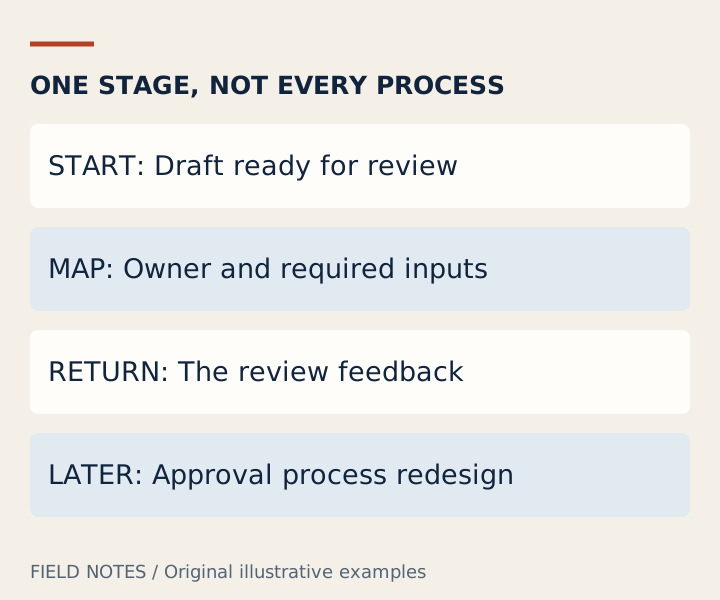
Cross-team work: agree on the first deliverable
Request: “We need a better review process.”
Reply: “Could we start with the handoff between drafting and review? I can document the current owner, required inputs and return message for that stage. Changes to approvals and publication would remain separate decisions.”
This response does not assume that one person can redesign every team's process. It proposes a specific boundary and makes the deferred parts visible. The other participants can check whether that boundary produces something useful or leaves out a necessary connection.
The boil the ocean meaning becomes actionable when you can name what will be delivered and what will not. “Make the process better” is broad; “document the drafting-to-review handoff” is observable. The second still needs agreement about who will review it and how it will be used.
Necessary dependency: explain why a detail must stay
Comment: “Don't boil the ocean; just send the updated guide.”
Reply: “Agreed that we are only updating this guide. I still need to confirm that the intended readers can open it; otherwise sending the link will not complete the task. I won't expand the review to unrelated documents.”
This reply accepts the limited scope while preserving the access check that makes the result usable. It identifies the relationship between the detail and the agreed outcome instead of defending every possible improvement. The scope remains small, but it is not artificially incomplete.
This is an important boundary of boil the ocean meaning. The expression should not automatically override a concrete explanation of why something is required. Ask whether the proposed omission changes the ability to complete the task, not merely whether the omitted step takes time.
Use a four-part scope note
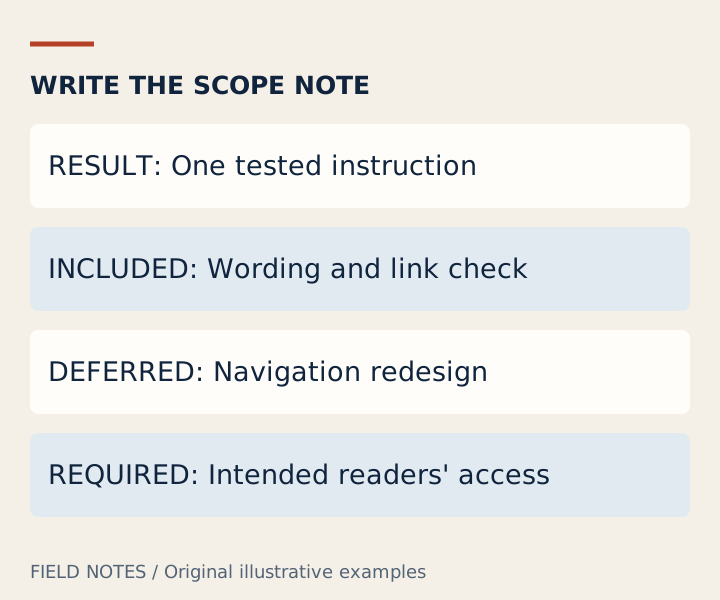
Write the desired result, what is included, what is deferred and which dependencies remain. Add an owner and a review point when they are relevant. The note can be short: “First result: one tested setup instruction. Included: wording and link check. Deferred: full navigation redesign. Required dependency: reader access. Review: the document owner checks the result before publication.”
For a lets-not-boil-the-ocean reply, acknowledge the need for focus and then propose this concrete boundary. Avoid responding with only “sure” if you and the requester may have different ideas about what is included. A specific question now is often easier than discovering incompatible expectations after the work is finished.
The move the needle guide helps distinguish a finished activity from a useful outcome. Pair that distinction with the scope note: a small deliverable should serve an actual goal. Choosing low-hanging fruit also requires checking value, not only ease. The LinkedIn Speak dictionary provides a broader reference for interpreting related planning expressions without assuming motives.
Questions about boil the ocean meaning
Does it mean impossible or just too ambitious?
Both ideas can be conveyed, depending on context. In a work discussion it often means the proposed approach is too broad for the immediate purpose, not that the overall goal could never be achieved. Ask which part needs narrowing.
Is the boil the ocean meaning always a criticism?
No. It can be a practical reminder to focus, a self-correction or a criticism of an approach. Tone and surrounding details matter. The expression alone does not prove the speaker thinks the person is incompetent.
Where does the phrase come from?
The image is intuitive, but the sources reviewed do not establish a single origin with confidence. This guide does not repeat a colorful attribution as a settled fact. The current workplace use matters more here than an uncertain origin story.
What is a clearer alternative?
Try “Let's define a smaller first deliverable,” “Which parts can wait?” or “Let's focus on this one question.” These alternatives make the request easier to act on. Keep the necessary checks and dependencies explicit when narrowing the task.
Sources and scope
Definitions are grounded in the sources below. Dialogues and illustrations are original teaching examples, not quotations, customer results or claims about anyone’s intentions. This independent guide does not represent LinkedIn.